


Hello You.
Last week we were listening to a very particular type of music. Judging by our emails, it was new to many of you. Which is what we’re here for.
We’re not going to dedicate a whole issue to Dolly Parton; it wouldn’t be anything more than an attention grab. We will say, though, it is a great time to take a moment, take a listen, and be glad we had her for as long as we did.
On with it!
Everything is a circle…
Or a cycle. Depending on the age group you sit in, you’re either looking around and seeing the 90s styling is desperately clawing its way back, or you’re enjoying the 90s-lite that is happening for the first time. There was something special about the music industry at that time. Big genres were running at high speed and in parallel. The cynic in us will say that now everything sounds the same (even though it doesn’t), and music ‘back then’ was better. But the early 90s fed our ears in so many ways; it was never just about the music, though. But is it ever?
Mainstream rejection…kinda
Grunge started its life as Sub Pop. And bands that were running with flannel shirts and half-smoked cigs hanging out their mouths were plentiful. ’91 gave us Nevermind, and there are owners of the original merch, from gigs at the time, out there. And there are teens right now wearing the reprints, which are plentiful, too. Alt became its own thing in a more meaningful way… the mainstream rejection turned into… everywhere and accepted(ish) in less than three years.

Gif by nirvana on Giphy
Punk split into huge jagged chunks. And in some cases got the sharp edges they earned in the 80s smoothed right down and radio-ready with bands like Offspring - Smash and Green Day - Dookie - both ‘94 releases. Warped Tour started in ‘95 and then turned into a behemoth of a punk-ish economy. But the first time up, there might not be many names you recognize.
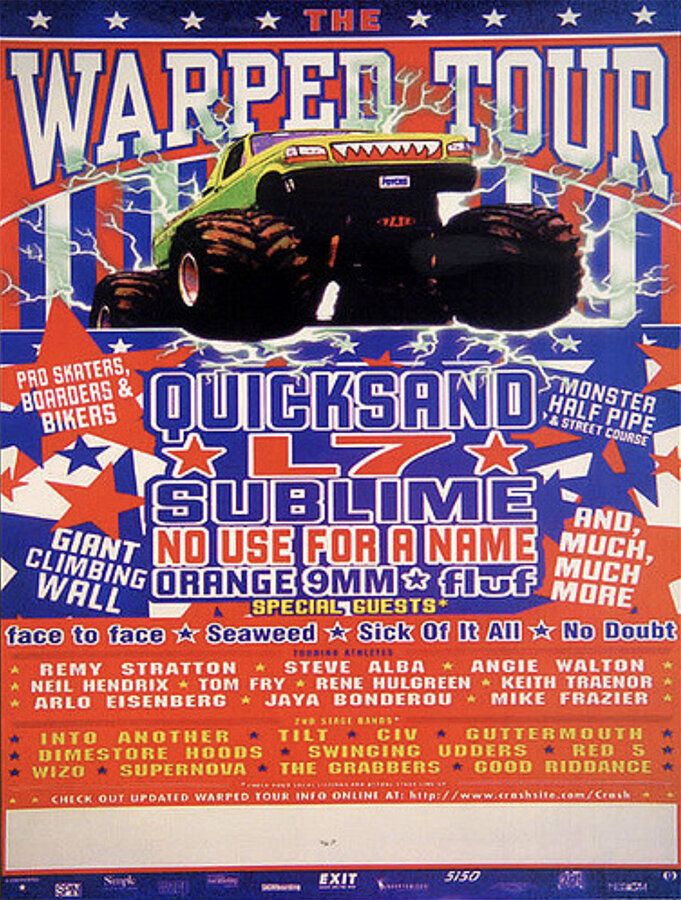
At the same time, one half was slipping its way into the mainstream, while the other half had bands like Fugazi running $5 all-ages shows on principle.
Death Row & Bad Boy
These two defining powerhouses of music turned the industry on its head. We could go into it, but there are plenty of documentaries worth watching. In the end, we lost incredible artists. Death Row Records (founded 1991, Los Angeles) and Bad Boy Records (founded 1993, New York) became the two labels associated with hip-hop's East-West divide. Tupac Shakur was shot in a Las Vegas drive-by on September 7, 1996, and died six days later; The Notorious B.I.G. was killed in Los Angeles six months after that, on March 9, 1997. Neither case went to trial for decades. That's changing right now: Duane "Keffe D" Davis is currently on trial in Las Vegas for Tupac's murder, with the prosecution having just rested its case this week.
Chin chin
Meanwhile, the tea-drenched UK was having a different, very light disagreement. Blur or Oasis. A back-and-forth of insults by way of tabloid. But, with two brothers who barely like each other, it fed into their ‘bad boys of music’ story. Since there were no guns, the only things that died in this case were egos. If you’re asking, we preferred Blur out of the two, but Pulp over both.
A more interesting thing was happening in Bristol, though. A sample-heavy, trip hop, electro sound-system culture was heaving. Rich, drippy, glorious. Massive Attack, Portishead and Tricky.
The joy of pirate radio gave the UK a rave scene. Drum 'n' bass and jungle pumped through the speakers. Sasha started DJing on pirate radio in Moss Side (Manchester); being at home in the house scene since the late 80s, this made sense. John Digweed and Sasha teamed up in the early 90s and shaped progressive house. On the harder edge, Prodigy and Chemical Brothers were dragging that same rave energy through breakbeats and distortion into something built for a warehouse. Sure, they’re good on a stage, but if you’ve never felt the dust of a wall crumble, and the bass line shudders through it? You’re missing out.

Giphy
But like all good things, the UK government wrote "music characterized by the emission of a succession of repetitive beats" into law as grounds to shut a gathering down. Making raves cooler, further underground and people feverish to get to one. Ministry of Sound and Cream had already opened their doors by then, in ’91 and ’92, and became the legal superclub answer to exactly that crackdown. The music didn't just soundtrack a subculture; it got treated as a threat by parliament.
Metal got more metal
Thrash's biggest stars went bigger and slower - Metallica's self-titled 'Black Album' (1991) traded speed for hooks and went diamond, which the old thrash crowd took as a betrayal even as it made metal a stadium proposition again. Pantera were doing something heavier and more mechanical with groove metal on Vulgar Display of Power the following year. By mid-decade, a new hybrid was forming out of hip-hop, funk, and detuned guitars - Rage Against the Machine fusing rap cadences with riffs and open political rage, Korn's self-titled debut in '94, and Deftones dragging the sound toward what would get called nu-metal.
Sharon Osbourne launched Ozzfest in '96 because mainstream festival bills weren't booking metal acts - same story as Warped Tour, a scene that built its own structure and space for the fans it knew it had.
Zines
The zine scene was always there, but it switched pace in the early 90s. Olympia and DC gave us Riot grrrl. Sights set on Bratmobile, Heavens to Betsy and Bikini Kill - all-age shows, printed media, word of mouth being the currency for notoriety. By the middle of the decade we had Hole’s Live Through This and Alanis Morissette’s Jagged Little Pill.
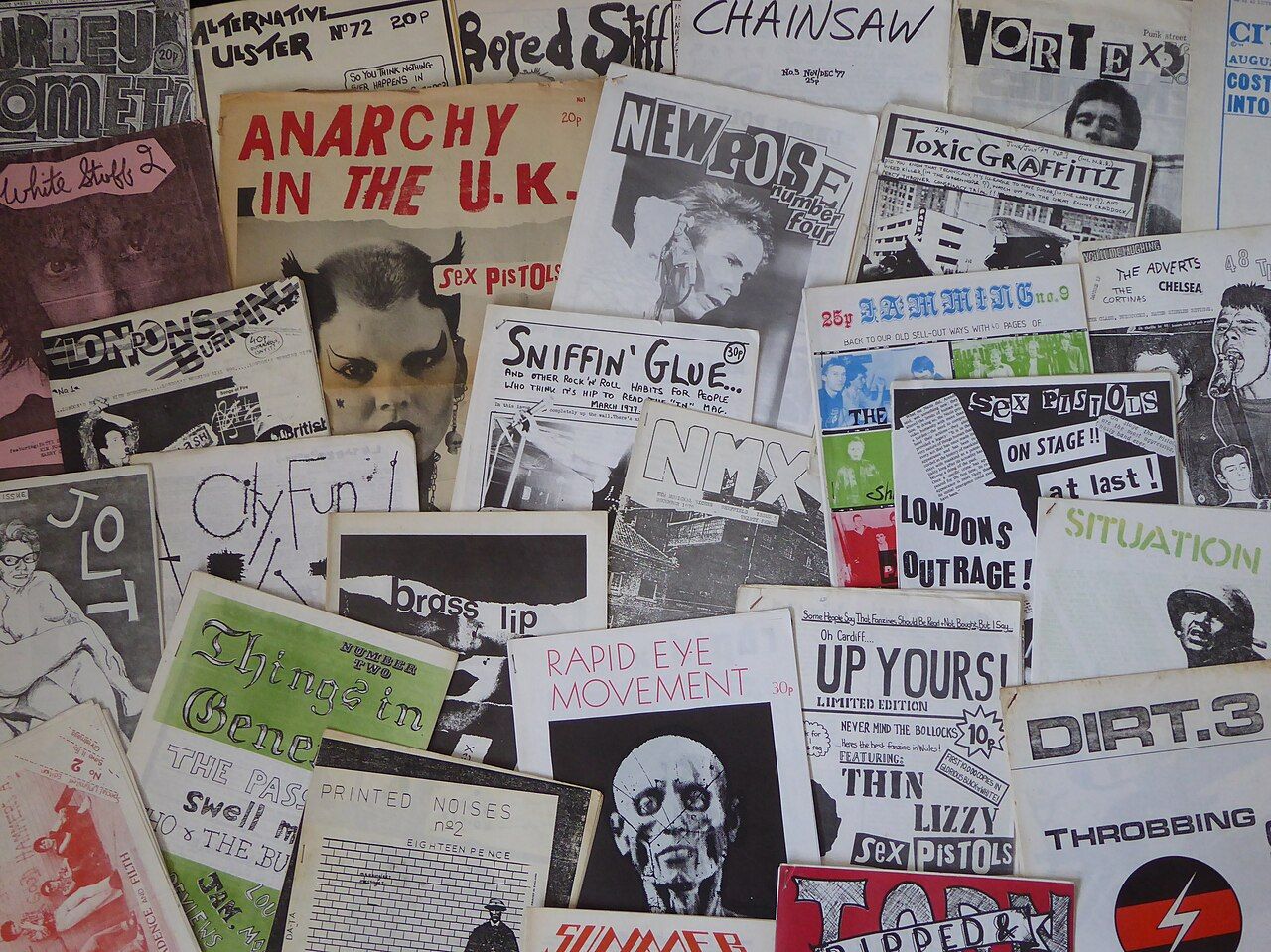
Jake from Manchester, UK, CC BY 2.0, via Wikimedia Commons
But can we ever go back?
No. Not literally. People can bring back zines, clothing, music styles, and even roll back to less tech. But there's no path back to a version of discovery that required a pirate signal, a specific record shop that had bootlegs dropped off by a random band, or trusting an older sibling's or a mate’s opinion because there was no other way to know. The friction that made those scenes feel the way they did wasn't a design choice; it wasn’t even good marketing - it was just what happened when information moved slowly and unevenly, scene by scene, with nothing smoothing the gaps between them. Everything here started unfolding all at once, in their own boxes. And depending where you lived, you’d be exposed to one more than the other.
To hear something else was to have searched for something that felt like home.
See you next Thursday.
Need something new? Check out RADAR.


Log in or subscribe to comment