


Hello You,
Before we get into it, if you haven’t checked out RADAR on Instagram, we regularly publish new artists for you to enjoy - so when you’re done here, come say hi over there. (link in the bottom of the newsletter).
This week? We’re enjoying a variety of obscenely long well-held notes, or in some cases, a good old yell. What makes them soooo good?

Gif by RespectiveCollective on Giphy
SongsBrew Editorial
A note worth choking for
If you’re like us, and we suspect you might be, you hear a song a couple of times, and whether it is a Beyoncé high note or Chester Bennington's 18-second banger, you give it a good go, probably in the car. Something about it has you trying your best to choke it out, failing, but still, the attempt was there.
An artist hits a note and just refuses to drop it long beyond where the bar might’ve allowed for it. The breath control is otherworldly, they push the note, hold it, pull it back - they own it, we’re just along for the ride.
These stunningly long notes weren’t an innovation of modern pop; they have been around since the 1940s (and before), with Mahalia Jackson, the American Gospel singer, being one of the most influential vocalists shaping what we hear today. Aretha Franklin took it into secular music, and Whitney Houston got it from her mother, Cissy, who belted out notes in church.
Every deep, rich, long note pulls from way back in the pews.
Note for Note… or not.
Almost all singers can hold a pitch, but this isn’t that. A clear sustain is holding a note for a while; you can probably do it too. But an obscene sustain sits on a different level. We know music impacts how we’re feeling, the speed of what we are doing - a physical, emotional, and mental reaction. Cool.
With a long note, when you are tuned in, you naturally hold your own breath or push it out alongside the singer, usually without even thinking about it.
A rush of dopamine hits at musical peaks, one of which is a vocal crescendo. Here are a couple that you should take a listen to, as well as a couple of outliers.
Aretha Franklin, I Never Loved a Man the Way I Love You She finds the note on the title phrase and does not resolve it cleanly. The vibrato widens. The hold extends past where the melody expects her to be. Aretha Franklin grew up the daughter of Reverend C.L. Franklin of Detroit's New Bethel Baptist Church, and that tradition runs through every sustained note she ever recorded. This is where you hear it most clearly.
Bill Withers, Lovely Day, Holding an 18-second high E, aside from being a great song, you should try this one.

Gif by soultrain on Giphy
Al Green, Let's Stay Together The quietest version of obscene. The falsetto arrives, everything else drops back, and the note just floats there. Al Green barely pushes, and it stays anyway. The restraint is the whole point. Sustain is not always loud.
D'Angelo, Untitled (How Does It Feel) Not a single held note as such. A sustained mood. The entire vocal breathes at his pace, not the song's. Every note he holds opens into the next one. The most advanced version of this is the hardest to explain. It is pocket (yes, those disgusting pockets we talked about the other week), and phrasing. Voodoo is 78 minutes of it. We will die on this hill.
Whitney Houston, I Will Always Love You The opening of the song already has about 5 seconds of melisma on a single syllable. Multiple pitches, one word, stacked and released. But the real sustain is the final chorus. Chest voice into mixed voice into head voice, one breath, no gap, no scramble, around 12 seconds. Whitney Houston learned this from her mother, Cissy, who sang gospel her whole life. The lineage is audible in every second of it.
Beyoncé, Halo Melisma into the hold, into the release, into the full arrangement underneath. Rapid-fire vocal changes, tune out for even a moment, and you miss it. The lineage from Mahalia Jackson to Aretha to Whitney to Beyoncé is a straight line. She knows exactly where this comes from and exactly what she is doing with it.
Noah Kahan feat. Hozier, Northern Attitude There is a reason TikTok gave this moment its own hashtag. It is not technically a sustained pitch. It is a sustained feeling that spills over, and it is very right in that moment. Hozier has been vocal about where his inspiration comes from, and this kinda showed it off with his yells.
And we would be remiss to not mention Chester Bennington (Linkin Park), Given Up, a 17/18-second non-melodic hold. This shows off lung capacity and breath control to an extraordinary level. He drops octaves as it extends, but doesn’t reduce the force. Stunning.
Are there rules for these things?
Yes… and no. The fermata is the notation symbol for hold beyond the written duration. No fixed length. The performer decides. Sometimes nobody decides, and the note stays until it is finished. When artists perform live, if they can hold them longer, they often do - throwing the ‘end’ right out the window.
Melisma is multiple pitches on one syllable; we’ve included a few excellent ones. The approach road to the shockingly long sustain. Gospel built it. Whitney perfected it. A generation of talent show contestants misused it for twenty years and nearly buried it, which is how you know it was powerful enough to survive.
Resonant frequency. Everybody has one. A sustained note at the right pitch activates your chest cavity, your skull, and the room you are sitting in. Some notes sit in your sternum. Some sit behind your eyes. Sustaining at the right pitch gets a bodily response.
What’s really interesting, though, is that what Hozier’s yell, or Chester's note, does for some, it won’t do for others. We all prefer certain pitches and notes; the joy in all the music we consume is finding the one that hits you just right.
In other news…
Spotify shipped a mini wrapped for their 20th birthday. And with it, you get to see the first song you ever played. Here’s one from the team:
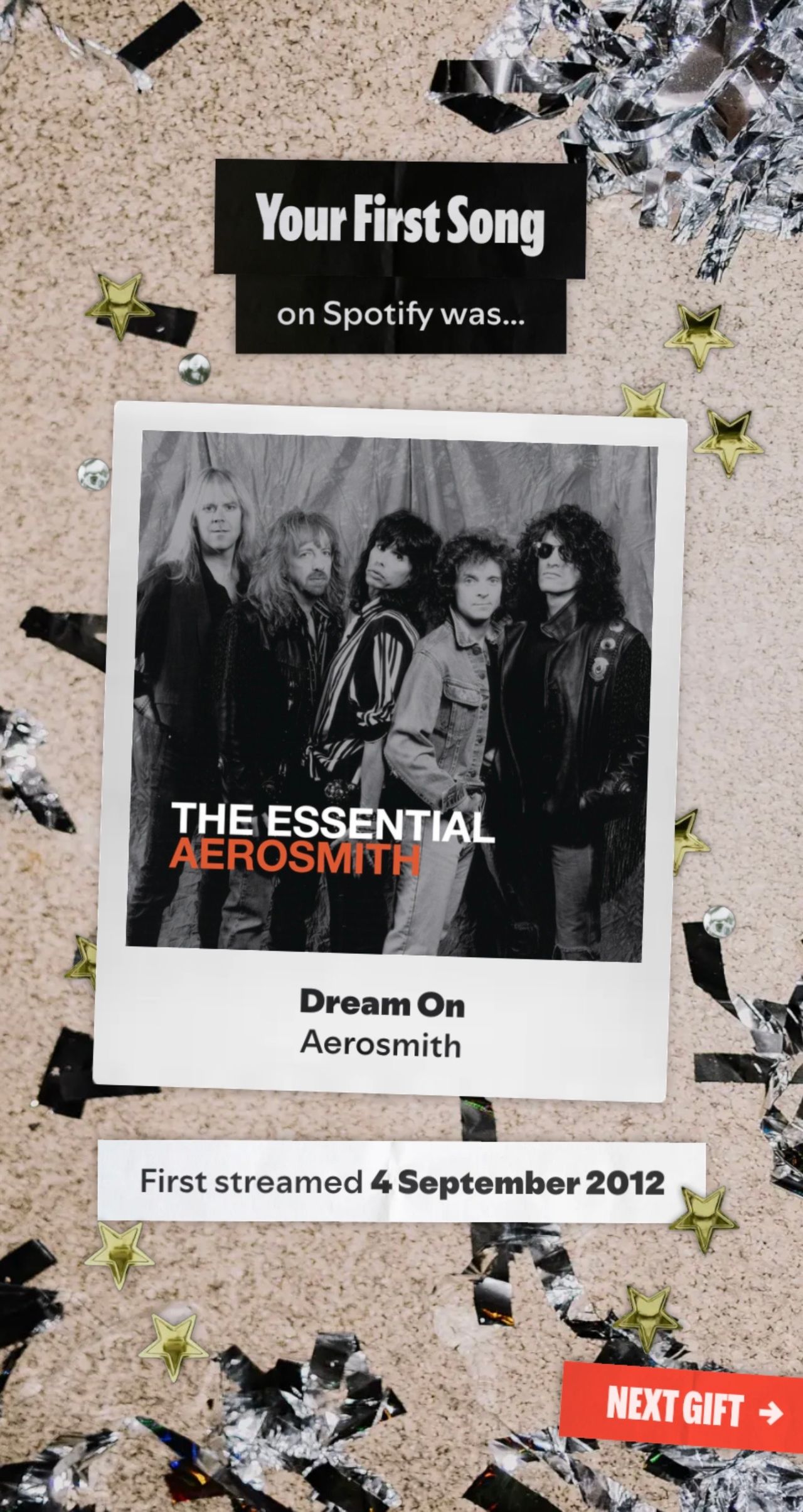
Which is pretty on point for this week, cause there are a couple of very gnarly sustain notes, and a cool hold and drift.
Amazon Music and Bandsintown are now officially a pipeline. Concert listings from Bandsintown will appear directly on artist profile pages in the app, with a buy ticket button that takes you straight through. Other platforms have been doing it for a while; it's nice for Amazon to catch up.
People have rediscovered that Tidal pays artists (up to) $0.013 per stream, which is roughly three to four times what Spotify pays. Tidal's subscriber base is still tiny compared to Spotify's 290 million paid subscribers, so the total income math is complicated. But the per-stream rate conversation keeps coming back around, and it probably shouldn’t stop.
CD Baby launched Stages Selects yesterday. Ten independent artists will receive priority distribution, DSP marketing, paid digital campaign support, and release planning guidance through the rest of 2026. The first artist is Morgan Nagler. CD Baby is now under the UMG umbrella following its acquisition by Virgin Music Group, which is either good news or complicated news depending on how you feel about that.
GNX disappeared from Apple Music, Tidal, Amazon Music, and YouTube Music on Monday. Spotify kept it the whole time. The videos for Not Like Us and Luther were briefly removed from YouTube and then reuploaded. Everything is back now. Neither pgLang nor Interscope has explained what happened.
A judge ruled Live Nation an illegal monopoly earlier this year. Arguments about whether to actually break the whole thing up have now been pushed to early 2027. The delay is its own kind of answer.
Olivia Rodrigo's AMEX Ticketmaster pre-sale turned into a dynamic pricing disaster this week. Prices spiked before most fans could get through. The same conversation, again, different artist, same system. We learned nothing from Scammin’ Harry or anyone else running it.
P.S. If you got the Spotify round-up and know your first song, drop it in the comments. Tap read online at the top of this email, and you’ll get the web version.
See you next Thursday.


Log in or subscribe to comment