
Hello You
Perhaps unsurprisingly, most of you who took the Quiz are Archivists! Although we have a few Goblins amongst you, too.
If you missed the quiz, you can find Your Type in just four questions.
Oh, and we included some YouTube playlists too!
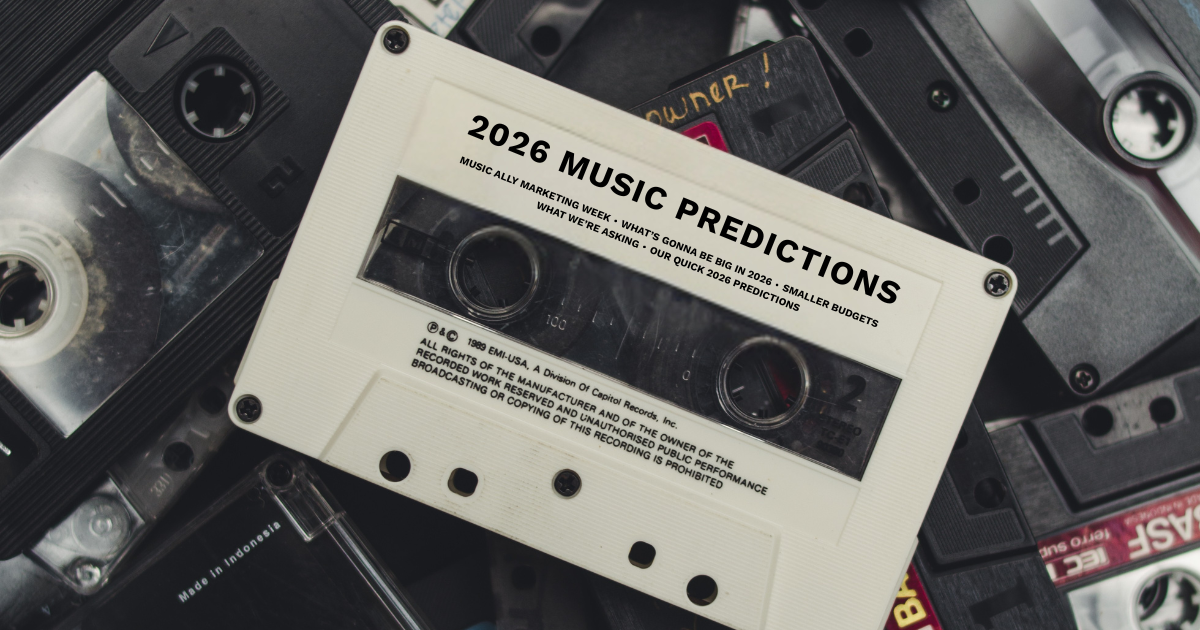
This week, we’re talking 2026 music industry predictions from some of the biggest (and most influential) names in music.
Grab a crystal ball →
SongsBrew Editorial
Music Ally Marketing Week
This year, we’ve sat in the offices at Warner Music and Massive Music, interviewed artists signed under Universal Records, and chatted with platforms like Ampollo. Most recently, we settled down with a coffee for a week-long marketing week hosted by Music Ally, with some fantastic names on the panel.
FUGA, Beautiful Digital, Music Ally, Believe UK, Platoon, Ranked Music, Mexican Summer Records, EGA Distribution, Decca / Fontana Records, City Slang, MDDN, Blue Raincoat Music & Chrysalis Records, 444 Sounds, That’s My Jamm, and more.
Impressive speakers, with some of the best understanding of the music landscape in 2025, and incredible predictions for 2026. Perhaps what was most interesting was that similar opinions came from all angles.
Let’s take it from the top!
At the start of the year, we were all doom-watching Suno and Udio lawsuits. For most of us, we didn’t think that they would make it this far, but they sure did. Now labels are holding hands with AI music generators. Cute pivot. Maybe this is the sign that we should all stop digging our heels in and accept it, or really stick with a turntable and speakers.
Meanwhile, artists are somewhere in the corner asking, “Did anyone ask us whether we’re cool with this, did we agree orrrrrr?” The tension is palpable in industry WhatsApp groups and open forums. Labels might sign off. Artists might not. Contractually, they might not get a say.
People love to say the industry always absorbs change (it does in most cases). EDM did it. Streaming did it. TikTok did it. True, all of those things got us to where we are now. But all those transitions came with digestible trade-offs. Less revenue here. More revenue there. Rights were reshuffled and then a couple more times. At least the rules made sense eventually. We know all these things suck for artists, but we became okay with it because we love ease.
Right now, nothing feels settled. So the conversation will keep going until we get there.
But will everyone be happy in the end?
(Some) People are moving away from major DSPs. Some because they want better artist payouts. Some because they’re bored. Some because nostalgia is an easier sell than another algorithm that may or may not be payola to the max. Piracy is creeping ever higher, it never really left, it’s just (kinda) socially acceptable again. Meanwhile, vinyl, tapes, and MP3 players have become the shorthand for “don’t feed the machine.” Or maybe they just look cool. Can be both.
So yes. The world is accelerating, and AI music is here to stay. But audiences are reaching for the brakes. Or at least questioning it enough to put a pause on it.
What’s gunna be big in 2026?
All sessions mentioned video in some capacity, so it is clearly on their minds. Not over-the-top cinematic videos. Short clips. YouTube is going to become the default platform because consumption is higher and the search layer is stronger. The music video still matters, but only as a prestige (read as: costly with little return) object. Daily marketing will be chopped into low-cost clips that feed the system.
BTS will grow even more. And we’re not talking documentaries like what we’re getting on Netflix with Ed Sheeran and Lewis Capaldi. We’re talking sustainable clipping that keeps fans doing half the work. Fan labour is the secret backbone of artist growth. As it should be. You love an artist and want to see them get their flowers? Fans need to do the work too.
The standout marketing shifts in 2025 were driven by artists who ditched the label playbook, as in, set it on fire. Ashnikko torched her old identity and went full Smoochie Girl. Fans ate it up because they had something to participate in. She is in the comments planning outfits and filming ‘What's in my bag’ content that looks like your bestie made it.
Lily Allen dropped a comeback/very honest album without warming up the audience, and still hit number one because real drama is worth interacting with - what followed was a sellout tour, and more fan content than anyone has time to catalog. And then there’s Fredagain. Turning those experiential moments into a ‘missed moment’ for millions, he is now taking fans to his SoundCloud thanks to a clip on TikTok where the comments are all asking, ‘Where can I find this?’.
While we are on the topic of SoundCloud, it was mentioned more than once as THE place for artists, indie labels, fans and music promo.
Then there is Joji, always one to watch, who is drip-feeding millions of hungry fans 30-second clips and album release dates. The combination was enough to sell out some vinyl versions and force a restock of others. With just three short tracks available (a new Pixelated Kisses remix featuring Yeat was dropped just a day ago), it is a sharp reminder that scarcity still lands, and good fan bases will wait years.
A solid shout-out goes to Sleep Token, too, for building a wildly large fanbase and keeping it interactive and fun.
Clipping is about fans, not marketers (but don’t be fooled, it all goes into the big marketing machine). Sure, you can buy a million views for $1,000. But everyone in the room knows fan-made clips carry more weight and better sentiment. Audiences trust each other more than any official channel, so all of those live clips are going to be part of a much bigger story. Cool. We’re excited to see this one play out - will it feel like there is too much content (there is already too much), or will we be dining out on all of the clips our favorite artists and their entire fanbase are putting out?
Smaller budgets
Experiential marketing will explode. Every record label or marketing team on the panels was convinced that “touchable moments” are the most effective way to create loyalty in a noisy environment. They’re not wrong. And they’re not early either, this one has been creeping in all year from the indie artists.
Gunna has already made the solid link between music and lifestyle. He invited fans to 5k runs across the US. Fans filmed everything. He walked out with engagement that money can’t buy and a community that’s now bonded by sweat and fandom. It’s brilliant. And it’s where everyone is heading. And somewhere we want to be.
The nostalgia trend will keep blooming; we’ve been talking about it for much of the year. But nostalgia is just the skin. The muscle is authenticity. Stripped-back sets, cheaper lighting (big tip that panels love was to use natural lighting to cut costs). All of that leads to fewer overproduced visuals, with more grit and honesty.
Bigger investment in storytelling and emotional connection. Fans are allergic to anything that feels engineered for conversions. There has been a noticeable increase (metrics and feedback) in people skipping anything too neat, too shiny, or AI. They want something they can hold now, as if digital overload is becoming more of a problem. In 2025, the best campaigns were object-based. Newspaper drops. USB sticks. Old iPods full of unreleased tracks. Experiential.
2026 isn’t about going back in time. It’s about making interactions tangible again.
What we’re asking
Are we watching the industry rebuild itself around fan agency and physical touchpoints because digital channels have lost their shine? Or because people simply trust each other more than they trust the marketing funnel? The latter is funny because it is the marketing funnel driving changes toward more fan focus… Controlled to a point, and certainly capitalised on.
Either way, the big winners in 2026 won’t be the ones who pivot fastest. It’ll be the ones who build the most believable worlds. And let fans have the keys to the door.
There were also plenty of mentions of newsletters (we were happy to see that). Many artists have mailing lists that remain dormant; we might see that change, and those lists become the first place you’ll find out about live stuff. A strategic change, as younger generations are slowly moving away from mass consumption on social media platforms, and want something that feels more personal and less processed.
Our quick 2026 predictions
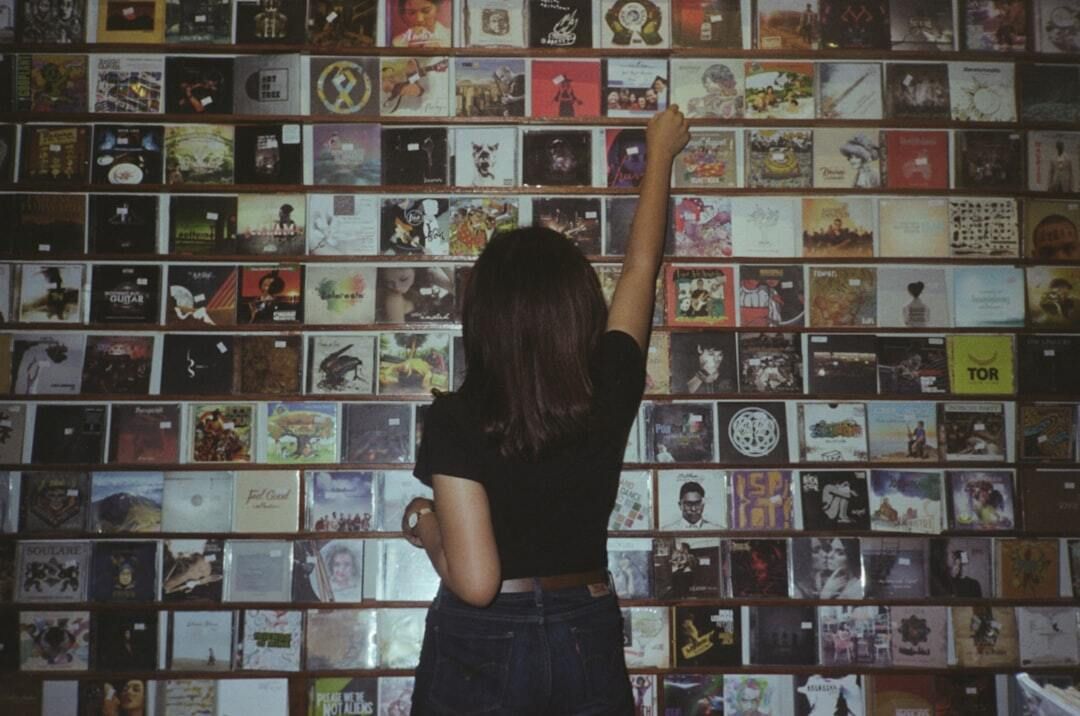
Continued small but steady growth of the vinyl market, backed by a 10.7% year-on-year growth. Same for cassette tapes.
Higher emotional search terms used to find playlists. A slow shift from activity-focused playlist finding and building to an emotional one. Swapping ‘playlist to cook to’ to ‘soft feel lofi playlist’.
Vintage music, both in style and actual. Vintage classed as anything pre-dating the 1950s. With the kick back against AI and autotune on the increase, vintage records are where you find that good-good vocal aesthetic.
(Sigh). AI integration and usage will become the industry standard for most areas in music. It is important to note that AI has been used in some capacity for years; we’re just seeing more of it as full music and vocal tracks now. It makes sense that from this, we will have more dedicated AI-only record labels.
A big one, but we’re calling it: independent music and artists will start out performing big label-based artists. Looking at how marketing will change, how fans are interacting, and how artists are handling it, indies, unsigned artists, and new artists are going to show us what we didn’t know we were missing. With so many mentions of Discord in music marketing week, we will see big growth in fan spaces there.
Superfan monetization, we’re seeing rumours of that coming into action with Spotify. And Amazon Music now has fan communities, too. Superfans are likely to spend more on experiences and music, so that will be on the up.
More legal battles between artists, labels, and AI generate music producers. Until we have firm legislation, this is likely to be an ongoing issue in 2026.
A Final Note
“Music washes away from the soul the dust of everyday life.”
Berthold Auebach

Let’s get social. Find us on Instagram @thesongsbrew
Until next time,
Log in or subscribe to comment