


Hello You,
Last week, we looked at why some songs just feel crunchy and loud no matter what the volume is.
This week, we’re sitting in the sweet spot. Why does it matter where you sit when you’re listening to music?
And, if you only use headphones, how can you squeeze the best out of them?
(Our collaborative Sleeper Agent playlist now has over 100 tracks and is growing. Link to join at the bottom of the newsletter.)
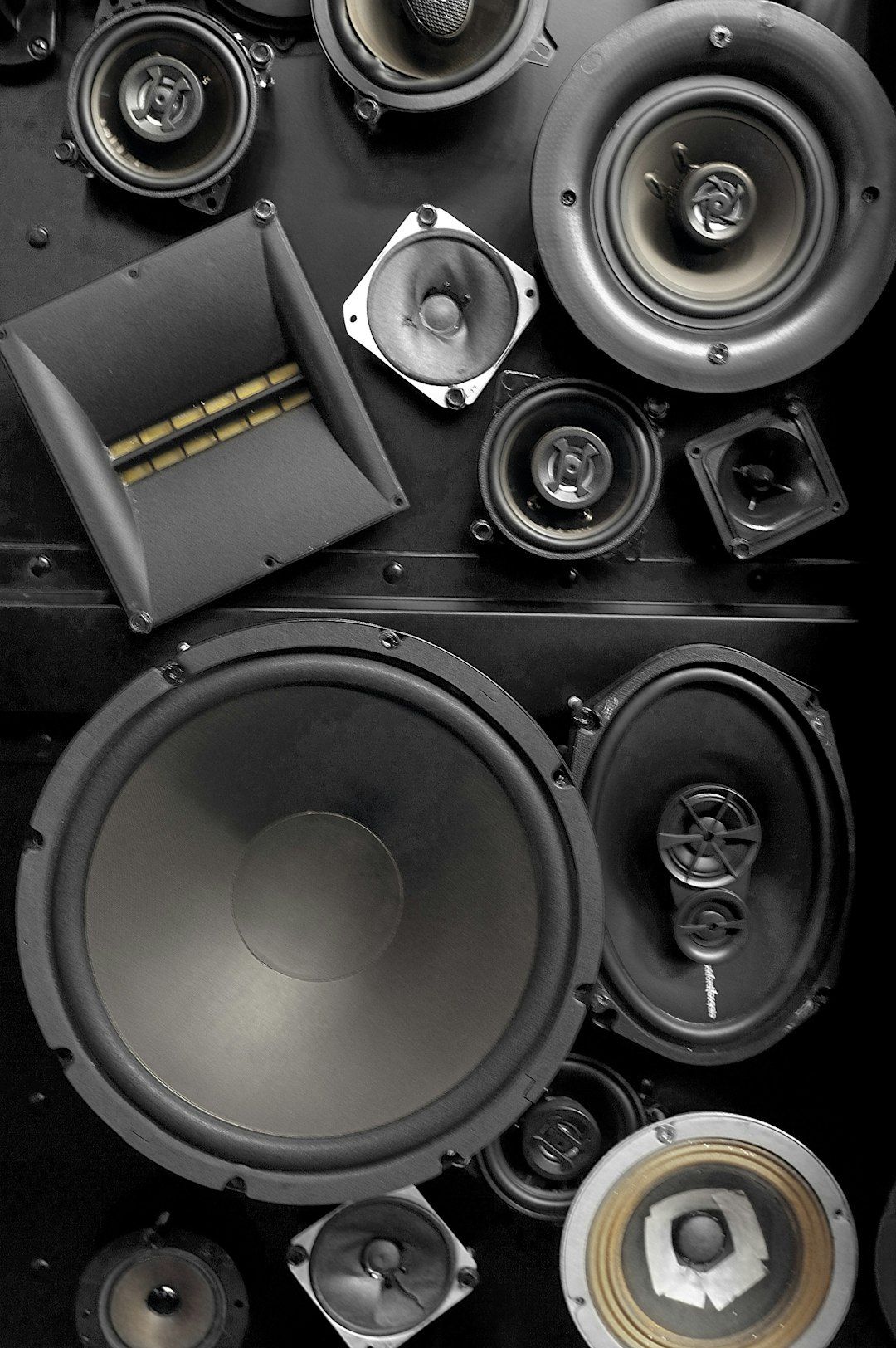
Photo by Steve Pancrate on Unsplash
SongsBrew Editorial
The triangle of truth
Most setups aren't set up. Speakers get placed a reasonable distance apart and often end up against the wall. They sound good, but they could sound great with a couple of adjustments.
Usually, there is nothing wrong with the equipment, and everything is just slightly wrong with the geometry.
The real sweet spot is a physical space where you can sit and get the most out of your speakers.

Gif by alo7english on Giphy
The starting point is making a triangle. Where you sit and listen, and your speakers should form an equilateral triangle. If you are too close to your speakers, the stereo field disappears; too far, and it'll start to get a little flat. The point where the sound from both speakers crosses should sit just behind your head.
Most people will naturally sit their speakers facing straight forward, but most often, having them angled slightly inwards, more towards your listening position, yields better sound.
This is where the sweet spot and your ears need to work together. Start with a really small 15-degree toe-in, listen to a song you know inside out, and adjust as needed. At one point, you will notice the difference, you will KNOW they are in the right place for you.
Your tweeter position matters - a lot. The tweeter is the top component on your speakers, and the bass driver (woofer) is at the bottom.
Tweeters handle high frequencies, detail, and clarity. Typically, they come in soft dome, metal dome, and ribbon. Soft is great for natural response; metal is ideal for brightness (can be aggressive); and ribbon is ultra-fast, high-frequency, with stunning clarity.
Woofers handle the low stuff, like bass and sound depth. Larger cones move more air and offer more power at the lower end of the musical range. Materials include kevlar, paper, polypropylene, and carbon fiber. Paper (and paper composite) offers more natural bass; polypropylene is more durable and offers a warmer sound; Kevlar is rigid, light, and has less distortion at high volumes; and carbon fiber is light and has great bass control and a faster response than Kevlar.
Port, one of the techniques used by brands to improve bass response without having a huge woofer, is a back port. Basically, a hole in the back of your speaker that allows more air to move through.
It's worth noting that some brands use specialized materials in their woofers and tweeters, so it's always worth checking what you have to know what sounds you can expect.
Tweeters should sit at ear level when you're seated. Higher or lower will give clarity changes in the vocals.
Back to the wall
For rear-ported speakers, placing them too close to the wall will cause the sound to bounce back in and create a muddy sound. Moving them a few centimeters at a time and listening will help find that sweet spot. Sealed or front ported? You can get away with wall mounting or a distance of 5-10cm.
Here is where space starts to become an issue for some people. If you can keep about 50cm of space between the speakers and the side walls or soft furnishings, you'll get a cleaner listening experience. The sound bounces off anything in its way, and your brain fuses the delayed bounce and what you're getting from the speakers together. Minuscule, maybe, but it makes a difference.

Giphy
Woof woof… time to crawl
A subwoofer is a game-changer and throws a little more into the mix. Corner placement seems like the obvious choice. Corners reinforce bass through boundary gain from two walls simultaneously. More bass. The problem is more of the wrong kind of bass (although sometimes this type of vibrating bass is what you want). Boomy, one-note, and muddy. A corner-placed sub is louder and worse.
Place it approximately one-third of the way from the corner of the room instead. That one adjustment alone will tighten the low end considerably. Subwoofers benefit from space, so let them have it.
The subwoofer crawl might have you feeling like your knees have seen better days, but you'll thank them for the effort. Put on a bass-heavy track, and start crawling around the room to see where it sounds best. Mark it, and place the subwoofer there. Practical? Not at all. But it is all in the pursuit of great sound. Believe it or not, when you can't tell you have a subwoofer while listening (because it is so refined), it means you've properly opened up your system. By this we mean it’s giving the rich, warm bass and depth without overwhelming or muddying anything. The sound is as one.
Headphones aren’t speakers
So it stands to reason that headphones don't have the same sweet spot. However, they absolutely have a way to get the best out of them.
Anything over-the-ear and anything with soft buds relies on the seal between your skin and the material of the pad or bud to help keep the sound as intended. If the sound is thin, too bright, almost tinny, there is likely a seal issue. Even the arm of your glasses can make a space in the seal that the headphones aren't designed for.
Most headphones are created and shaped to be worn a specific way, too. The driver inside is angled to be relative to your ear canal. Too far forward or backward, and you'll lose detail or have a harsh treble.
Having ANC on or off will change the frequency response. ANC applies a corrective curve to compensate for external noise. The sound isn't always better with it on, but most of us aren't bothered enough to check. (Also… good noise cancelling means we don’t need to hear other people, so maybe we leave this on?)
In the end… EQ
Bad placement can't be saved by EQ (nor can bad headphones or low quality equipment). But your sound can be further refined once everything else is in place. Your room layout matters, so the room-correction EQ on most amps and streamers is worth using. Parametric or even a basic slider EQ is the next stop. Use the sliders to find what works for your room and your ears.
For the bass specifically, to keep the weight while reducing wall or floor wobble, a gentle low-frequency cut just below 100Hz is usually cleaner. For those with a rear port close to the wall without anywhere to move the speaker, that 2-3dB bass cut will be your best friend. Hard rooms think: glass, no carpeted floors, big space, a treble cut above 8kHz is a nice starting point. Soft rooms with lots of furniture and carpets, you've got more wiggle room, so use it.
Need a playlist with a wide stereo image, bass placement, phantom center, and spatial production? > Finding The Sweet Spot.
Always cut first and boost after, or you'll end up with everything maxed. Boost only what your ears know you're missing.
A crossover point to be aware of: if you have a subwoofer, the crossover frequency is where the sub hands off to the main speakers. Most people leave it at 80Hz and never touch it. The right crossover point depends on how low your speakers go. If your bookshelves roll off at 70Hz and your crossover is at 80Hz, there is overlap and muddiness. If they roll off at 60Hz and your crossover is at 80Hz, there is a gap, and you lose presence in the low mids. Match the crossover to your speakers' -3 dB point. Check the specs of each part of your set up - not everything is designed to/can work together.
You can also just go completely on feel, and ignore all of this. It’s your sound after all.
Most of us are listening to our setup at about 60% quality because we assume that the brand and money we spent will bridge the gap - it does a lot of work, sure, but it can’t fix the basics.
The cool thing is, you don’t need to upgrade your system if it isn’t in the budget right now; you’ll get a better sound with a few adjustments.
There is always a sweet spot; it’s time you sat in yours.
See you next Thursday.



Log in or subscribe to comment