
Hello You
Welcome to another week of what's happening in the music world.
Last week, we did a short roundup of some of the bigger stories; this week, we’re going back ten years.
Well, us and the rest of the internet.
Join us for a journey through time.
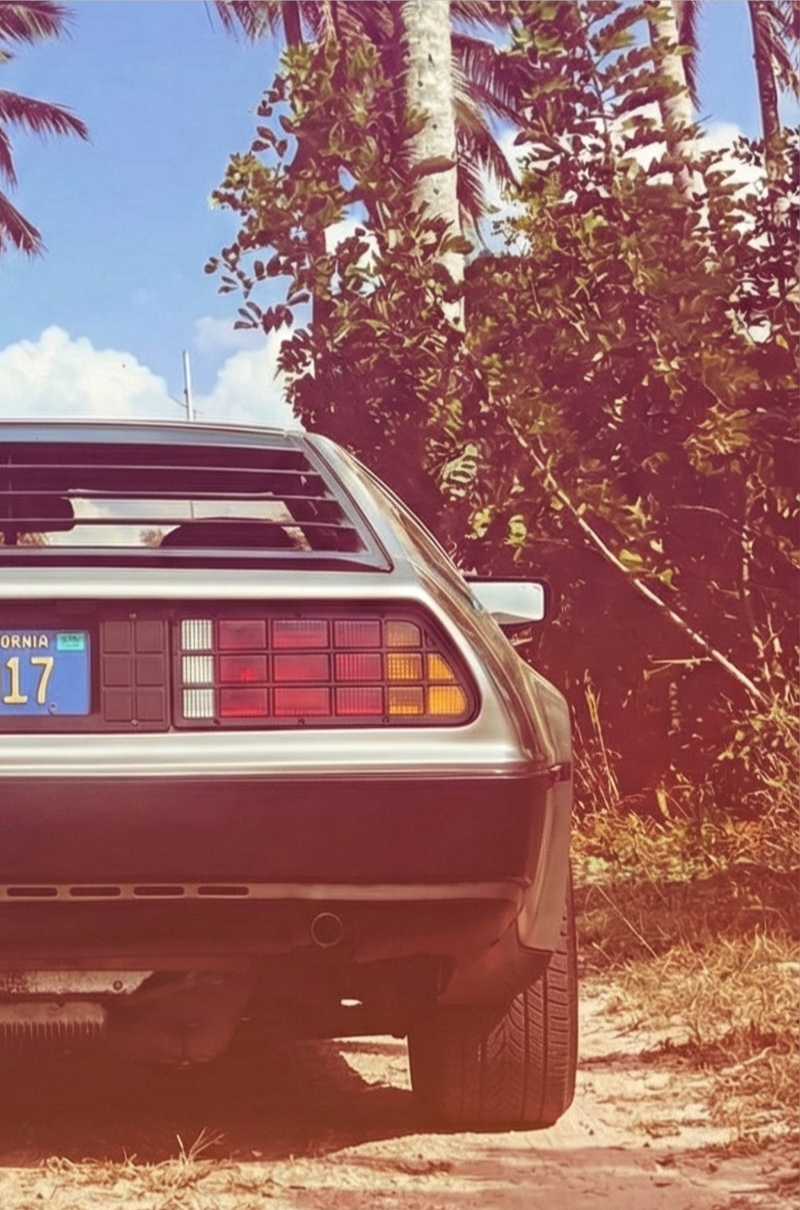
Hop in our DeLorean.
We’re kicking it to 88.
Get in →
SongsBrew Editorial
Send Us Back
You might’ve noticed that 2016 is the year that the internet wants back, unless you’re not as chronically online as we are, in which case, we salute you. But what was it about 2016 that's become so coveted? Was it even that good, or are we all wearing the same pair of rose-colored glasses and romanticizing it? Well, we’ve done some digging to unearth the music changes that were making a splash. Thanks, Nielsen, for your 2016 music mid-year report.
THE YEAR THE STREAM TOOK OVER
2016 was the year that music streaming started to change the gravity of the whole industry. It went from 44% of the market to 54%, big numbers at the time. Keeping in mind how much that market has grown, we’re now in a more "mature" phase in 2026, code for “almost everyone who is going to subscribe already has”. Our audio-specific market share now sits at roughly 51.9%. While that looks like a decrease on paper, the market is massive now, and short-form video has a total chokehold on how we consume media.
Top-performing albums for 2016 were by Drake, Adele, and Beyoncé. While Drake has solidly stayed at the top of the charts ten years later, he’s been joined by The Weeknd, who just became the first artist to consistently cross 120 million monthly listeners. While Adele still does well, her streaming numbers don’t compare to the streaming-first giants of today.
DIGITIZED & DEATHS
2016 was also the year of the first major releases that were "superboosted" by digital formats: Drake, Kanye West, and Beyoncé. We also saw the first streaming-only album to chart on the Billboard 200 with Chance the Rapper’s Coloring Book. It was a move that basically rewrote the rulebook for indie artists everywhere. Digital first is now commonplace, though we are seeing some artists invest more into the physical and fanbases requesting that too.
But 2016 wasn’t all sunshine and rainbows. Far from it. We lost some of the greats: Phife Dawg (A Tribe Called Quest), Glenn Frey (The Eagles), Maurice White (Earth, Wind & Fire), George Michael on Christmas Day, Prince in April, and we started the year with David Bowie’s death.
WE STOPPED OWNING, WE STARTED RENTING
Perhaps one of the coolest pieces of trivia from that year is that Hip-Hop and R&B took the top spot for streaming as a genre, while rock music remained the genre where physical sales were king. Streaming, in its 2016 form - which was clearly not its final form - turned the music industry around. After a 15-year decline, global revenues hit $16.1 billion. For the first time ever, digital revenues overtook physical sales internationally.
The downside? We started to shun paying for digital downloads (errr, apart from those of us who were pirating like our lives depended on it, we already weren’t paying) in favor of monthly subscriptions. At the time, this took shape in a 24% decrease in individual song downloads. We stopped owning and started renting. Something that hasn't changed at all is that artists and labels started talking about the "value gap." Seeing millions of streams on YouTube wasn’t paying the bills, while Spotify and Apple Music seemed to offer something better. Ten years later, we’re still having this same conversation. Except now none of the streaming giants pay fairly, with Qobuz topping any ethical streaming lists.
A GOLDEN HOUR
Conversely, at the start of the digital revolution, vinyl saw its highest sales in 25 years, clocking 13.1 million units sold. Now vinyl is sitting pretty. Splatters, liquid-filled, split designs. Collectible and beautiful. Sales have nearly quadrupled since that 2016 peak.
While the wax was spinning, Tropical House was absolutely grabbing us by our ears and making us nod our heads. This was the year the "Bieber Pivot" happened, when he dropped the pop-star persona and leaned into the 110BPM bump. A spill-over from 2015 that we took with us into 2016. Thanks, Jack Ü (Diplo and Skrillex), though ‘cause Where Are Ü Now was the game changer. And we don’t hate it. How can you?
2016 felt warm, like a sun-drenched, synthesizer-soaked fever dream. Little did we know when it was gone, the music industry would never be the same again. You could still feel that injection in 2025, and we’re guessing the early half of 2026 will be fat with replays while we feverishly trawl Spotify for our 2016 bangers. ‘Cause we can.
Editor’s Note on the Timeline: You’ll notice a few 2015 tracks. We included these because, while the "data" says 2015, the "feeling" of 2016 would be empty without them. They are the carry-overs that refused to die.
DEATH OF THE DIGITAL OUTLAW
But there is a grit to 2016 that a mid-year report can’t capture.
2016 was the funeral for the scavengers. Before the 110BPM bumps on streaming platforms became the industry standard, we spent the late 90s and 2000s as digital nomads. We remember the frantic era of Limewire and Pirate Bay: the anxiety of a progress bar that might deliver a hit single or a computer-killing virus. If you were lucky, you’d get to feast on studio recordings you couldn’t get anywhere else; remixes with no names, unreleased demos, the "full album" before it even had a release date. One CD purchased, thousands of copies distributed.
We remember the stacks of Verbatim jewel cases; those burnt CDs with Sharpie-scribbled titles that now sit in attics, slowly oxidizing into unreadable plastic ghosts. We spent hours crafting the perfect 80-minute narrative, only for the disc to skip on the one song we actually wanted to hear, or the batteries to go dead. And god-forbid should it rain and a single drop hit the case and sneak its way down onto your overly saturated home-printed cover. Blooms of displaced ink sitting inside cracked cases.
This is the data that can’t be accounted for: the stuff that "never was" but felt like everything. Sure, there was stuff in between, but it was all leading up to where we are now.
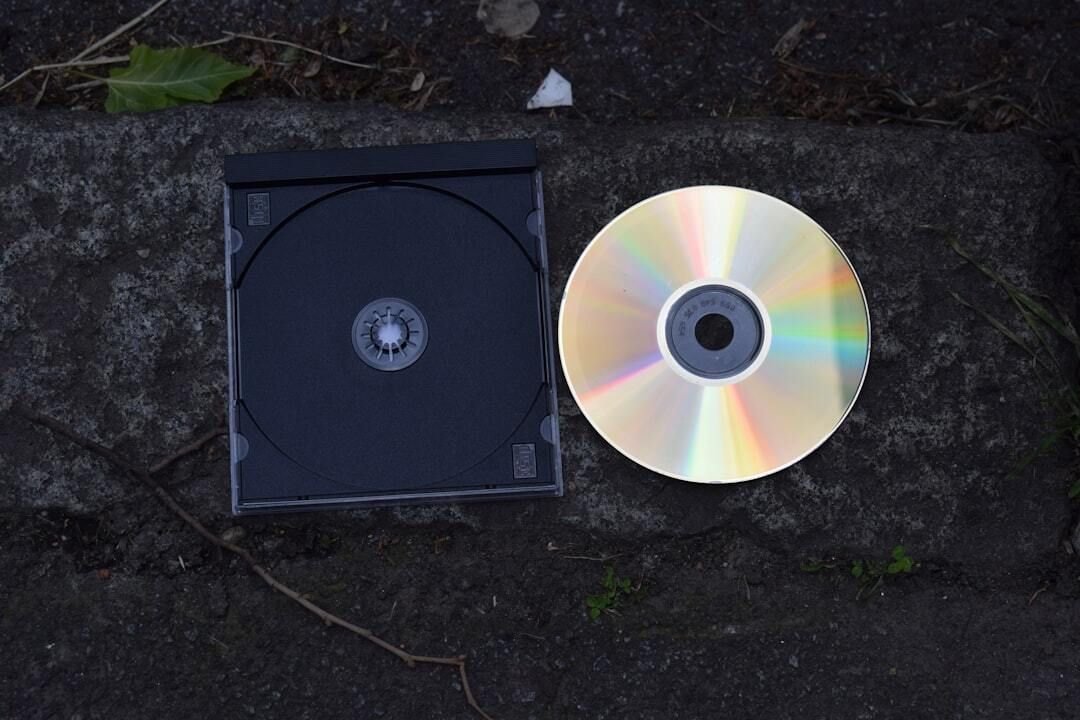
Photo by Marija Zaric on Unsplash
THE GREAT MIGRATION.
Stepping into Spotify for the first time felt like being handed the keys to the Library of Alexandria. Suddenly, the music we used to "hunt" was just there. It was the start of everything, the end of the gatekeepers and the "storage full" notification, but it was also the end of a certain kind of intimacy. We traded the tactile scratch of a needle and the lawless thrill of piracy for a clean, algorithmic hum. Because like all new things, everyone wants it. But this became the standard.
In 2016, we were standing on the fault line. We were just starting to realize that by clicking "Agree," we were transitioning from true curators (or maybe we mean selective thieves) to subscribers. We gained the world's discography but lost the heavy, dusty weight of "owning" well… anything.
Looking back from 2026, 2016 feels like the last year the internet felt human-sized. It was the sweet spot between the chaos of the early web and the hyper-optimized, AI-fed loops we inhabit now. We say we want to go back, but we don't actually want the slow download speeds. We want simplicity, with all the mod cons.
We want that feeling.
We want to feel like music is an event again. If you were showing up for music before 2016, it was always an event to you, not just background noise for a scrolling feed. But you can see the changes in action, you’ve seen the rise, the fall, and the multiple shapes of the industry.
We don’t know how this ends. We’re in an AI-fuelled litigious space, we’re in a hype-release, 18-of-the-same-vinyl in different colors kind of time. We’re in a world of tens of thousands of new music releases every day, and more are on the way. And it never stops, and the feed never refreshes fast enough, and the algorithm is screaming at us to listen to something we don't even like. And,,.. and, and…
And the truth is, we can get back there. We do it every time we bypass the "Recommended for You" playlist to drop a weighty 180 (a vinyl) onto a turntable. We’re doing it by looking longingly at CD players and cassette players.
We do it when we listen to an album from start to finish, with zero effort and no thought of skipping. 2016 might be a decade in the rearview, but the soul of it is still ours. It’s still right there.
If you’re willing to find a balance between the physical and the digital, you can truly have everything.

2016 playlist.
A Final Note
“Music itself is going to become like running water or electricity. You’d better be prepared for doing a lot of touring because that’s really the only unique situation that’s going to be left.” - David Bowie.
Until next time,


Log in or subscribe to comment